
Blog
Beauty Tool Supplier Red Flags That Cost Private Labels 40% in Lost Margin

Every year, private label beauty brands lose an estimated **12–18% of gross margin** to defective batches, hidden mold fees, and missed launch windows — all traced back to one decision: choosing the wrong **beauty tool manufacturer**. The biggest cost isn’t a bad makeup sponge or brush. It’s signing a contract before auditing the production floor, QC lab, and packaging line. This guide exposes the **7 supplier red flags** that separate dependable OEM/ODM beauty tool factories from partners that quietly erode your margins.
## Red Flag #1: Vague Tooling and Mold Fees That Inflate Your True Unit Cost
Some factories quote a low per-unit price and bury the real profit in “tooling,” “mold opening,” or “sample development” fees. Industry audits show that **hidden tooling costs can add 20–35%** to first-year landed cost for private label beauty accessories.
Before choosing a **beauty tool manufacturer**, get the tooling agreement in writing with a clear buyout clause. Reliable beauty tool manufacturers itemize mold ownership, cavity count, and amortization upfront.
– Does the tooling fee transfer ownership to my brand after X units?
– Is the mold cost amortized into the unit price or charged separately?
– What is the mold lifespan, and are maintenance fees included?
## Red Flag #2: “Flexible MOQ” Without a Written Small-Batch Trial Clause
Low minimum order quantities sound perfect for new brands. But an unwritten “flexible MOQ” often disappears when you request 300–500 units for a test run. Reliable **private label beauty tool suppliers** document small-batch trial terms in the contract.
### How to Secure a True Low-MOQ Trial Order
– Request a **300–500 unit pilot order** with the same materials as mass production.
– Confirm the unit price difference between trial and bulk orders in writing.
– Agree on a fixed production timeline, not “around 30–45 days.”
A **beauty tool manufacturer** that supports small-batch trial orders proves it serves new brands, not just high-volume buyers.
## Red Flag #3: Missing CE, MSDS, or Batch-Level Inspection Reports
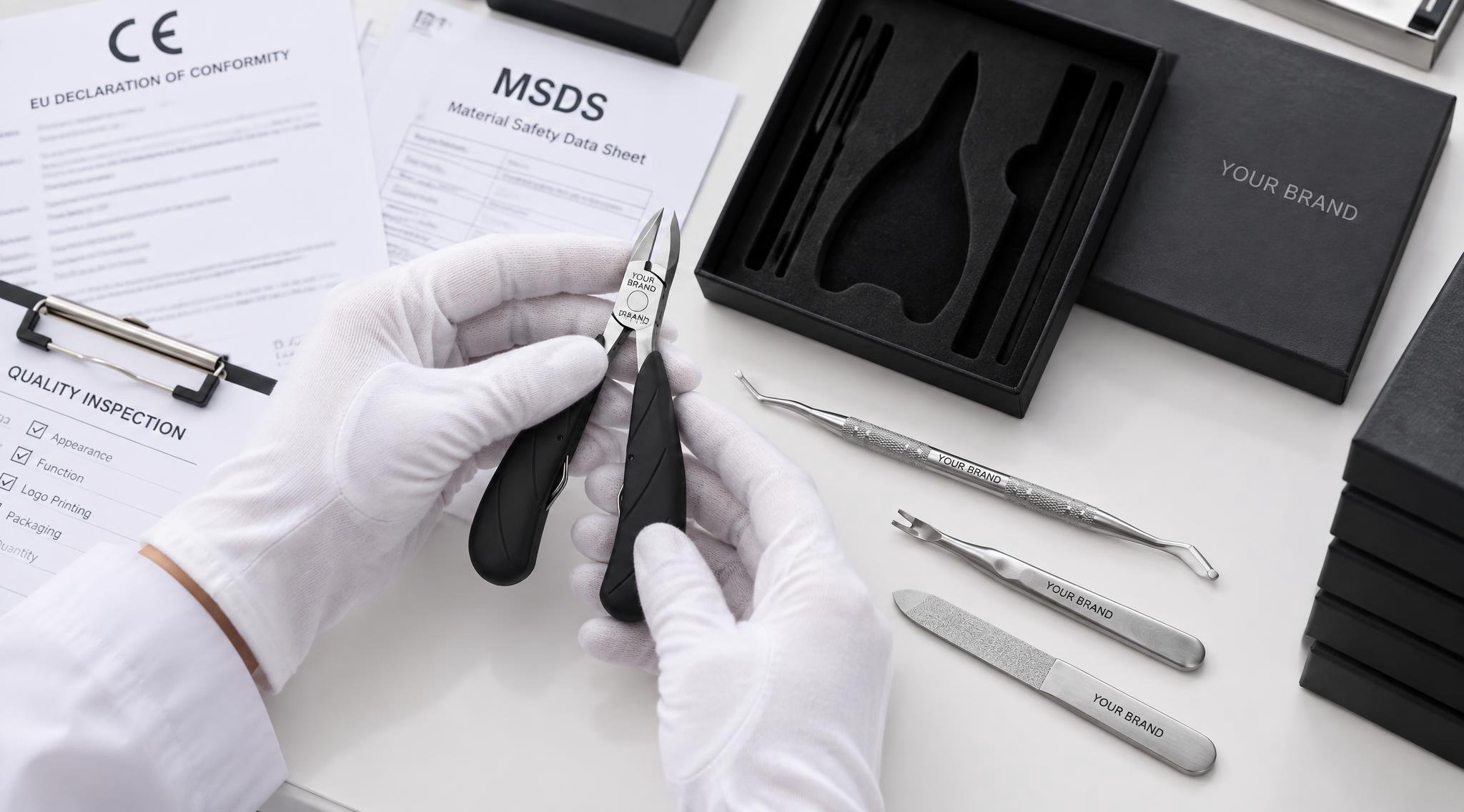
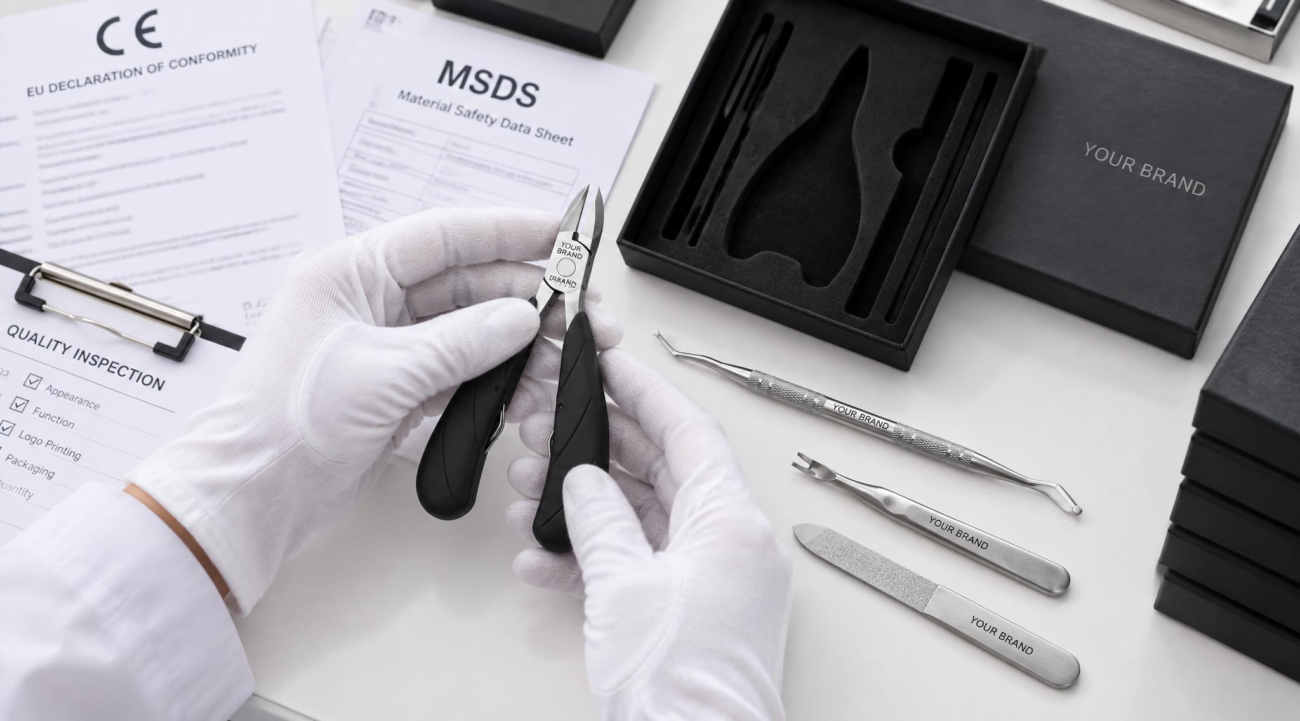
Export-ready cosmetic tools — from silicone face scrubbers to eyelash curlers — require compliance documentation. A **beauty tool manufacturer** that hesitates to share CE, MSDS, or RoHS reports is a compliance liability waiting to happen.
Full QC documentation should include:
– **CE certification** for EU-bound tools and electrical beauty devices.
– **MSDS** for materials like silicone, TPE, ABS, and metal alloys.
– **Batch-level inspection reports** (AQL 2.5 or tighter) before shipment.
– **Third-party lab tests** for phthalates, BPA, and heavy metals.
Reliable beauty tool manufacturers typically provide these documents before you pay the balance, not after the container leaves the port.
## Red Flag #4: No Automated Production Line Visibility or Capacity Proof
A stable launch window depends on factory capacity. If a supplier can’t show live or dated photos/video of its injection molding, trimming, and packaging lines, treat that as a risk signal. Automated production lines reduce human error and keep lead times stable during peak season.
### Capacity Questions That Reveal Real Readiness
– How many automated lines run daily, and what is the daily output?
– What is the current order backlog for Q3/Q4?
– Can you provide a **weekly production schedule** with milestone photos?
A **beauty tool manufacturer** with real automation can typically offer **stable 25–35 day lead times** for repeat orders, even before holiday rushes.
## Red Flag #5: Unclear OEM/ODM Ownership of Logo, Packaging, and Design Files
OEM/ODM partnerships fail when brands don’t own their assets. A trustworthy **beauty tool manufacturer** defines IP and file ownership before sampling begins.
### Protect Your Brand Assets in the Contract
– **Logo and packaging design files** remain your property.
– Custom mold and tooling ownership transfers after final payment.
– The factory may not sell your exact design to competing brands.
– Any private-label item produced for you cannot be listed on their marketplace store.
Without these clauses, your “exclusive” makeup brush or gua sha tool can appear under another brand in six months. The right **beauty tool factory** treats your design as proprietary from day one.
## Red Flag #6: Hidden Costs in Packaging, Inserts, and QC Rejects
The quoted unit price is rarely the final cost. Industry audits show that **packaging, inserts, and defect allowances add 8–15%** to landed cost when left unstated.
Request a **line-item cost breakdown** covering:
– Bulk product unit price
– Custom logo printing and hot stamping
– Inner boxes, outer cartons, and poly bags
– Inserts, instruction cards, and barcode labels
– AQL defect allowance and rework fees
Reliable beauty tool manufacturers typically lock these costs in the proforma invoice so your landed cost matches your margin model.
## Red Flag #7: Slow or Evasive Communication During Sampling and Pre-Production
Pre-production communication predicts post-payment behavior. If a supplier takes 5+ days to answer sampling questions or avoids video calls, assume the pattern will continue after the deposit clears.
Set clear SLAs from day one:
– Sample confirmation within **24–48 hours**.
– Pre-production sample shipped within **7–10 days**.
– Weekly production updates with photos or video.
– A single point of contact who understands export documentation.
A responsive **beauty tool manufacturer** treats your timeline as a production deadline, not a suggestion.
## The Reliable Beauty Tool Manufacturer Checklist
Use this 10-point audit before signing any OEM/ODM contract:
1. Tooling and mold fees itemized with ownership clause
2. Written low-MOQ trial order terms
3. CE, MSDS, and third-party test reports on file
4. Automated production line photos or live video
5. Documented lead times and weekly milestone updates
6. Clear IP ownership for logo, packaging, and designs
7. Line-item landed cost breakdown
8. AQL defect allowance and rework policy
9. Responsive sampling and pre-production communication
10. References from other private label brands in your category
Print this list and take it into every **beauty tool manufacturer** meeting.
## Conclusion
A dependable **beauty tool manufacturer** is a margin-protection strategy, not just a vendor. The three takeaways: **audit hidden costs before signing**, **lock low-MOQ and IP terms in writing**, and **demand full QC documentation before balance payment**.
Use this checklist to audit your current supplier or shortlist new OEM/ODM beauty tool factories. If a factory fails three or more checks, walk away — your launch calendar and margin will thank you.
—
## 📚 Related Resources
1. Anchor: ‘beauty tool OEM vs ODM: which model fits your brand’ → /beauty-tool-oem-odm-guide
2. Anchor: ‘low MOQ beauty tools for new private label brands’ → /low-moq-beauty-tools-new-brands
3. Anchor: ‘CE, MSDS, and RoHS export certification checklist’ → /beauty-tools-export-certifications
4. Anchor: ‘how to audit a cosmetic tools factory before signing’ → /cosmetic-tools-factory-audit
5. Anchor: ‘private label packaging cost breakdown’ → /private-label-packaging-costs
—
## ❓ Frequently Asked Questions
**Q:** What is a safe MOQ for a new private label beauty brand?
**A:** A safe starting MOQ is typically **300–500 units** for a pilot run. Reliable beauty tool manufacturers document the trial price and mass-production price in writing so new brands can test demand before committing to bulk orders.
**Q:** Which certifications should a beauty tool manufacturer provide for export?
**A:** Ask for **CE certification** for EU-bound tools, **MSDS** for silicone, TPE, ABS, and metal materials, **RoHS** for electronic beauty devices, and batch-level inspection reports (AQL 2.5 or tighter) plus third-party lab tests for phthalates, BPA, and heavy metals.
**Q:** Who owns the mold and packaging design in an OEM/ODM beauty tools contract?
**A:** Ownership should transfer to your brand after final payment. Reliable beauty tool manufacturers itemize tooling fees and include a clause preventing them from selling your exact design to competing brands or listing it on their marketplace store.
**Q:** How long should production lead time be for beauty tools?
**A:** Reliable factories with automated production lines typically offer **stable 25–35 day lead times** for repeat orders. Weekly production schedules with milestone photos help verify capacity before peak season.
**Q:** What hidden costs should I watch for when choosing a beauty tool supplier?
**A:** Watch for unstated tooling and mold fees, custom logo printing, inner and outer packaging, inserts, barcode labels, and AQL defect allowances. Industry audits show these can add **8–15%** to landed cost when not itemized upfront.