
Blog
Beauty Tool Supplier Red Flags That Cost Private Labels 40% More in Rework

Industry audits show that **43% of private label beauty brands lose 40% of first-year margin** to defective brushes, missed lead times, and hidden MOQ fees. The root cause is rarely the product idea—it is a poorly vetted beauty tool manufacturer. Before you sign with any beauty tool supplier, verify OEM/ODM capability, real minimum order quantities, export certifications, and whether the production line can actually scale. This guide walks through seven red flags that separate reliable beauty tool factories from costly ones.
## Why Beauty Tool Manufacturing Quality Decides Your Brand’s Survival
Private label beauty tools—makeup brushes, sponges, jade rollers, and brush sets—live and die on tactile feel. A misaligned ferrule or shedding bristle triggers returns, chargebacks, and one-star reviews that outlast any launch campaign. Industry audits show that a single bad batch from a beauty tool manufacturer can erase the profit from two good ones.
To avoid costly chargebacks, treat factory selection as a risk-control process, not a price negotiation. The cheapest beauty tool supplier quote often hides costs in rework, air-freight expediting, and compliance failures.
## 7 Red Flags to Avoid When Vetting a Beauty Tool Factory
### Red Flag #1: They Refuse Small-Batch Trial Orders
Reliable manufacturers typically offer flexible MOQ for new brands—often 500 to 1,000 units to start. If a beauty tool manufacturer demands 5,000 units on the first order, they are signaling a transactional relationship. Insist on a paid sample run and a low-risk trial order before committing your brand.
### Red Flag #2: No Documented OEM/ODM Process for Logo, Design, and Packaging
A real OEM/ODM beauty tool manufacturer can show a customization workflow: logo engraving or UV printing methods, color matching for handles, and packaging dielines. If the sales rep says, “Send the logo and we will figure it out,” that is a red flag. Private label beauty tools require controlled artwork approvals, not improvisation.
### Red Flag #3: They Cannot Produce CE, MSDS, or Full QC Reports
Export-ready beauty tools need CE marking for the EU, MSDS for cosmetic-contact materials, and batch-level QC reports. A legitimate beauty tool supplier provides third-party lab reports, not just a “we are certified” claim. Request the actual certificate numbers and verify them independently.
### Red Flag #4: Vague Lead Times and No Automated Production Line
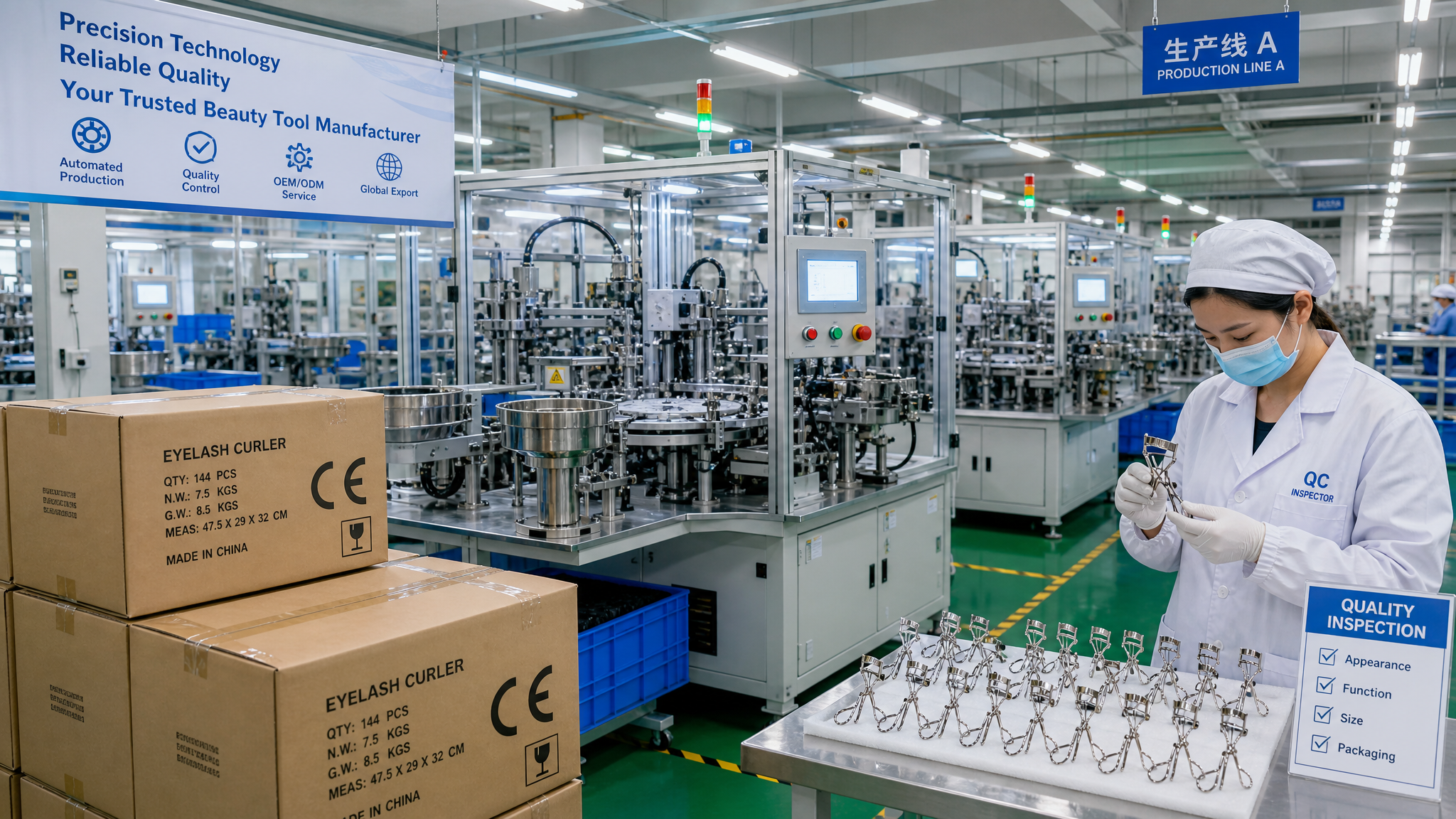
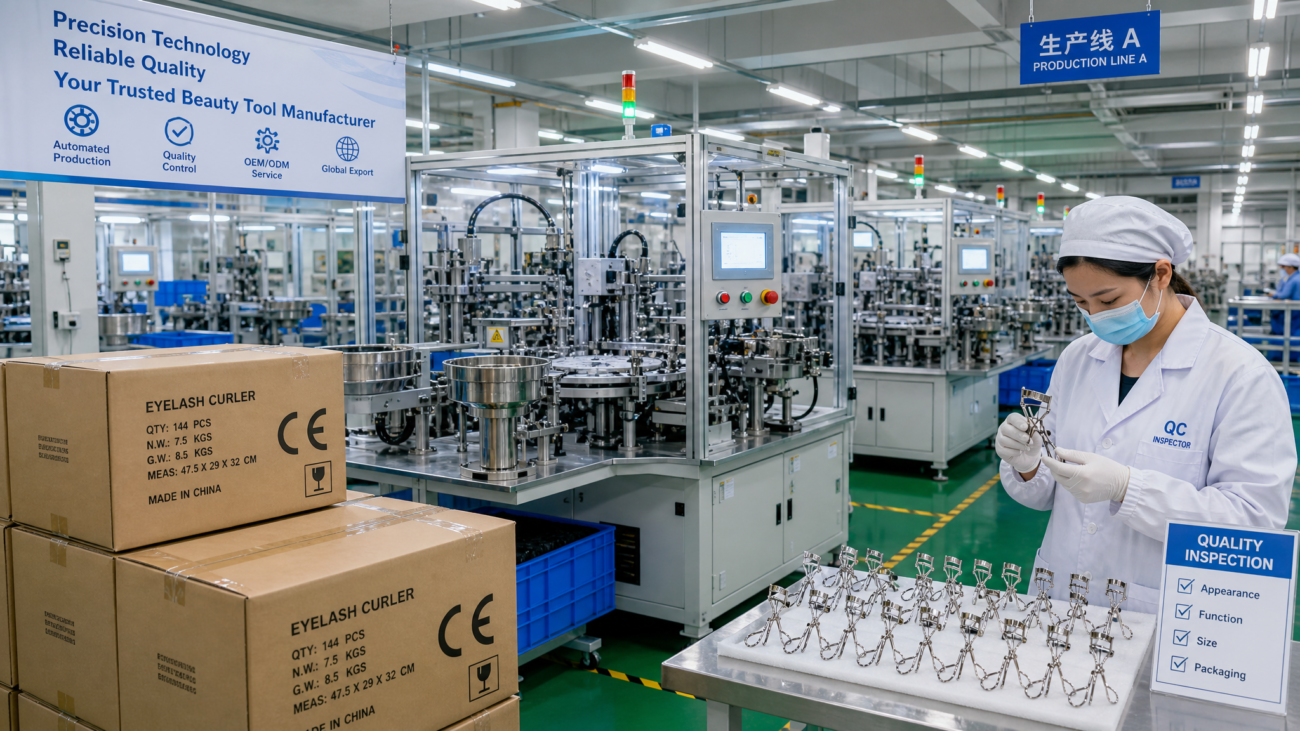
If a beauty tool manufacturer cannot state daily output capacity and automation level, delivery will slip. Automated lines typically hold lead times at 25–35 days for standard orders. Manual-only workshops often add 2–3 weeks when they overbook.
### Red Flag #5: Hidden Fees for Tooling, Printing Plates, and Packaging
The quoted unit price is never the total cost. Professional beauty tool suppliers itemize tooling fees, logo printing plate charges, insert cards, and export cartons upfront. It is a red flag if they “discover” a $500 plate fee after you have paid the deposit.
### Red Flag #6: No Defect Rate History or AQL Sampling Standard
Ask for the factory’s historical defect rate. A reliable beauty tool manufacturer quotes an AQL standard—typically AQL 2.5 or tighter for beauty tools. No AQL standard means no enforceable quality gate.
### Red Flag #7: Vague Answers on Materials and Skin-Safety Compliance
Beauty tools touch skin, so materials matter: ferrule nickel content, bristle fiber source, and adhesive safety. A credible beauty tool factory shares material datasheets and traces every component. Vague answers on nickel-free ferrules or REACH compliance are a hard pass.
## Quality Control and Export Certification: A Practical Audit Checklist
Full QC is not a perk—it is the moat. Use this checklist when auditing a private label beauty tool manufacturer:
– Incoming material inspection for bristles, handles, and ferrules
– In-line checks for bristle density, shedding, and ferrule crimping
– Finished goods inspection against AQL 2.5
– CE certification for EU export
– MSDS for adhesives and coatings
– Third-party lab tests for heavy metals and allergens
To avoid costly chargebacks, require a pre-shipment inspection report with every batch. Reliable beauty tool suppliers include this or charge a small, transparent fee.
## How Flexible MOQ and OEM/ODM Customization Protect New Brands
Flexible MOQ is the most underrated profit lever for new private label brands. Small-batch trials let you test three or four SKUs for the cost of one large, wrong bet.
OEM/ODM support should cover three layers:
– **Custom logo:** laser engraving, UV printing, or hot stamping
– **Custom appearance:** handle colors, ferrule finishes, and brush shapes
– **Custom packaging:** boxes, pouches, insert cards, and retail-ready displays
A true OEM beauty tools partner treats packaging as a marketing asset, not an afterthought.
## Automated Production Lines and Stable Delivery: The Real Cost of Delays
A 30-day delay on a seasonal beauty launch can cost you the entire quarter. Automated production lines give the beauty tool manufacturer capacity visibility and consistent output.
Automation also improves quality: machine-set ferrule crimping reduces loose heads, and automated bristle cutting reduces shedding complaints. When you compare beauty tool suppliers, ask for a factory video tour focused on the production line, not the showroom.
## Final Supplier Audit Checklist
Before you sign with any beauty tool factory, confirm all seven items:
1. Confirm minimum order quantity plus a small-batch trial option
2. Verify the OEM/ODM customization process with physical samples
3. Request CE, MSDS, and third-party QC reports
4. Audit automated production capacity and lead-time history
5. Get a line-item quote including tooling and printing fees
6. Agree on an AQL standard and pre-shipment inspection
7. Confirm material traceability and skin-safety compliance
## Conclusion: Vet Like a Buyer, Not a Browser
Three takeaways define a reliable beauty tool manufacturer: **verifiable certifications (CE, MSDS, full QC reports), transparent MOQ with trial-order flexibility, and an automated production line with stable lead times.** Any supplier that cannot document these three is already costing you margin.
Use this checklist to audit your current beauty tool supplier before your next purchase order. If a factory fails two or more red flags, walk away—your brand’s reviews and reorder rate depend on it.
—
## 📚 Related Resources
1. OEM beauty tools pricing guide — /oem-beauty-tools-pricing-guide
2. How to design custom makeup brush packaging — /custom-makeup-brush-packaging
3. CE certification checklist for beauty products — /ce-certification-beauty-products
4. Beauty tool MOQ comparison for startups — /beauty-tool-moq-startups
—
## ❓ Frequently Asked Questions
**Q:** What is the minimum order quantity for private label beauty tools?
**A:** Reliable beauty tool manufacturers typically offer flexible MOQs starting around 500–1,000 units for a trial run. Always ask for a small-batch trial before committing to bulk production.
**Q:** What certifications should a beauty tool manufacturer provide?
**A:** Look for CE marking for EU export, MSDS for adhesives and coatings, and third-party QC or lab reports for heavy metals and allergens. Verify certificate numbers independently.
**Q:** Can new brands start with a small-batch trial order?
**A:** Yes. OEM/ODM beauty tool suppliers that support new brands will offer low MOQ trial orders, usually 500–1,000 units, so you can test SKUs before scaling.
**Q:** How do I verify quality before placing a large order?
**A:** Request pre-shipment inspection reports, confirm an AQL standard such as AQL 2.5, and order paid samples from the actual production line before bulk production.
**Q:** What is the typical lead time for custom beauty tools?
**A:** With an automated production line, standard custom beauty tool orders typically ship in 25–35 days. Manual-only workshops often run 2–3 weeks longer when overbooked.