
Blog
7 Costly Red Flags to Avoid When Choosing a Professional Eyelash Curler Manufacturer

A single defective eyelash curler can trigger a **19% product-return spike** and destroy your brand’s beauty-category ranking. If you’re sourcing a **professional eyelash curler manufacturer**, the difference between a **0.8% return rate** and a **7% return rate** usually comes down to five or six supplier red flags you can spot before signing a PO.
## Red Flag #1: Weak Springs That “Feel Snappy” in Samples but Deform in 30 Days
The spring is the single most common point of failure in a private-label eyelash curler. Industry audits show spring fatigue drives an estimated **41% of curler-related returns** in beauty-tool lines. A supplier that cannot show a **high-rebound spring test report** — typically **20,000+ compression cycles** with less than **3% tension loss** — is asking you to absorb their quality debt.
– Ask for a spring fatigue test certificate, not just a sample.
– Compare springback speed: a quality high-rebound spring returns to full open position in under **0.3 seconds**.
– Reliable manufacturers typically use hardened stainless steel or beryllium-copper alloy, never uncoated iron wire.
## Red Flag #2: One-Size-Fits-All Curvature That Ignores Eye Anatomy
A generic 32mm arc will not fit Asian monolid, deep-set, and hooded eyes equally. The best professional eyelash curler manufacturers engineer a **wide-angle curvature** with a compound radius that adapts to multiple eye shapes. If a factory cannot explain arc geometry or provide CAD curvature profiles, you will inherit fit complaints and “doesn’t reach corner lashes” reviews.
– Request 3D arc drawings for each SKU before tooling.
– Validate against at least **3 eye-shape fit panels**: monolid, hooded, deep-set.
– Ask how the silicone pad contour compensates for lash-angle differences.
## Red Flag #3: Hidden MOQ and Tooling Fees That Kill Cash Flow
Many factories advertise a low MOQ, then bury **mold amortization, logo engraving setup, and per-color change fees** in the quote. To avoid costly chargebacks, lock pricing into a **full-inclusive quote** before sampling. A transparent professional eyelash curler manufacturer will offer a genuine **low MOQ** (often **300–500 units** for stock designs) and free design support for custom pad colors and logo placement.
– Demand a line-item quote: unit cost, tooling, engraving, packaging, freight.
– Confirm whether MOQ applies per SKU or per color.
– Ask if the factory warehouses your custom silicone pads to lower reorder MOQ.
## Red Flag #4: No Free Design Support or Slow Sampling Turnaround
Free design support is not a bonus — it is a signal the factory owns its tooling and can iterate quickly. Suppliers that charge for every logo revision usually outsource tooling and slow down your launch. Strong OEM/ODM partners deliver **free design mockups within 48 hours** and physical samples within **7–10 days**.
– Verify in-house CAD and tooling capacity.
– Ask for the average sample turnaround in writing.
– Request a design-for-manufacturability (DFM) review before sampling.
## Red Flag #5: No Yield-Rate Data or Weak QC Documentation
A factory that cannot state its first-pass yield rate is guessing. High-performing professional eyelash curler manufacturers run **95%+ first-pass yield** with **AQL 1.5** or stricter sampling. Ask for SPC (statistical process control) charts on spring tension and pad alignment — not just a polished inspection video.
– Require AQL 1.5 or AQL 1.0 on critical dimensions.
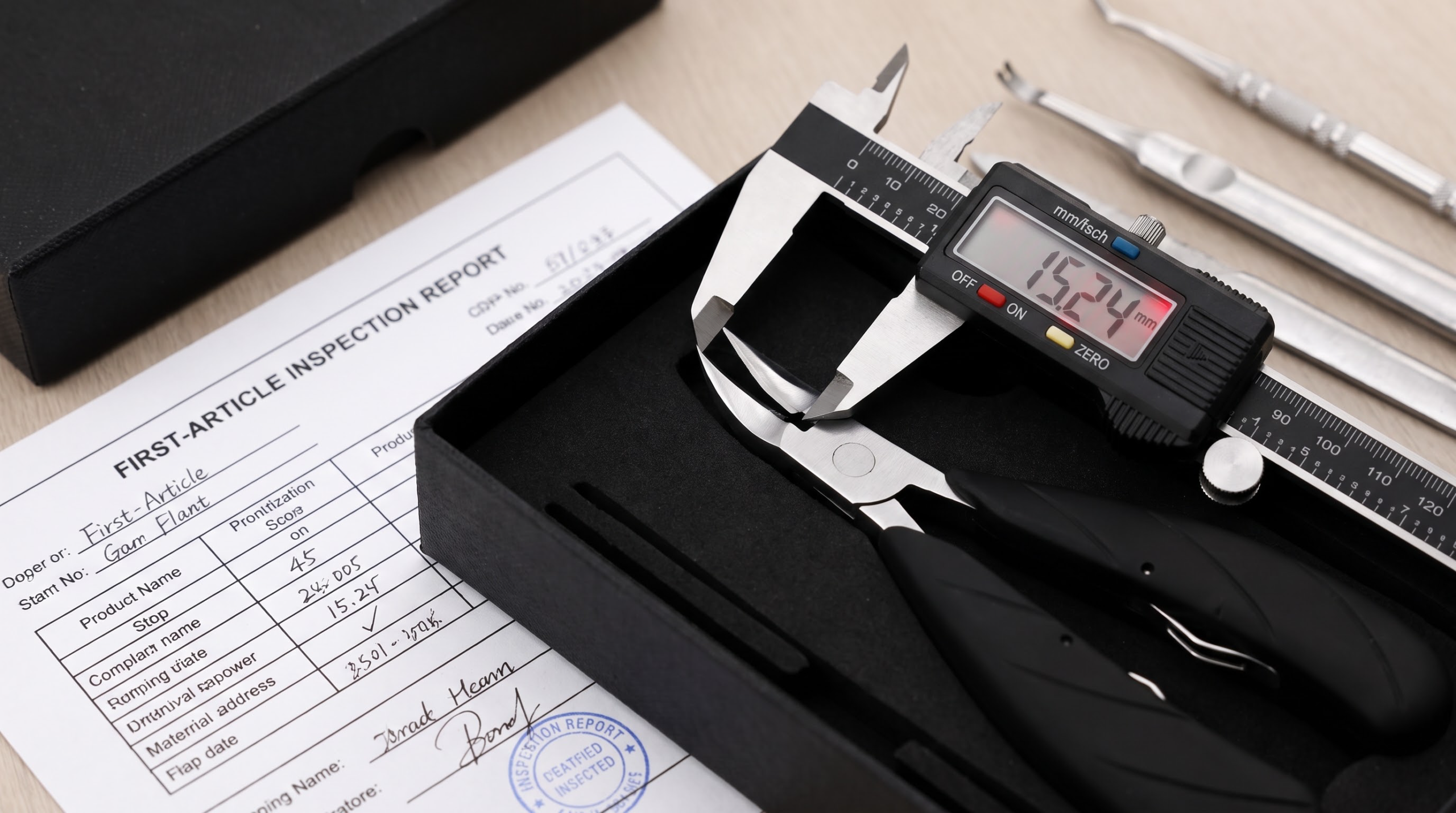
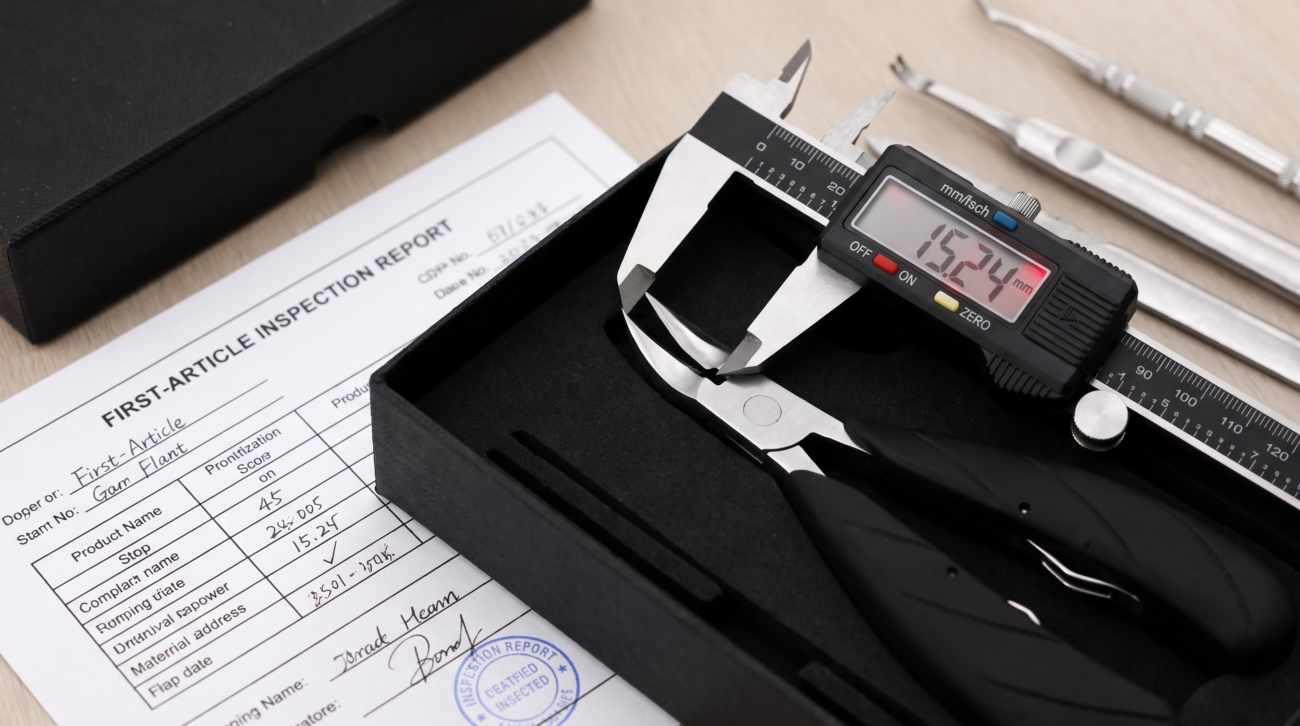
– Ask for first-article inspection (FAI) and pre-shipment inspection (PSI) reports.
– Confirm inline torque/tension testing, not end-of-line visual checks only.
## Red Flag #6: High After-Sales Return Rates from Pinching and Inconsistent Crimp
Pinching is the #1 consumer complaint that quietly erodes repurchase rates. A properly engineered curler eliminates the pinch point with a **guarded hinge gap and rounded pad edges**, while a dual-radius lever produces a **natural, even curl** without crimp marks. Reliable manufacturers typically quote a **return rate below 1%** and can show terminal reorder data from existing retail accounts.
– Test the pinch point: close the curler on a thin strip of paper — it should compress evenly with no hard stop.
– Check crimp consistency across **10 consecutive compressions**.
– Request reference accounts with repeat purchase history.
## How to Audit a Professional Eyelash Curler Manufacturer: 5-Step QC Checklist
### Step 1: Request the Spring Fatigue Report
Get third-party or in-house lab data for **20,000 cycles** with tension loss under **3%**.
### Step 2: Validate Arc Fit Panels
Ask for fit-test results across monolid, hooded, and deep-set eye shapes.
### Step 3: Lock a Full-Inclusive Quote
Confirm low MOQ, free design support, tooling costs, and per-color terms in one document.
### Step 4: Audit Yield and Return Data
Require **95%+ first-pass yield**, AQL 1.5, and documented return rates below **1%**.
### Step 5: Run a 10-Unit Destructive Test
Compress samples **500 times**, then check springback speed, pad alignment, and pinch-point geometry.
## Conclusion: Your Supplier Audit Is Your Margin
Three takeaways: First, **spring quality and arc geometry** decide return rates more than price does. Second, **low MOQ means nothing** without a full-inclusive quote and free design support. Third, **demand data** — yield rates, fatigue reports, and terminal repurchase numbers — not promises. Use this 5-step checklist to audit your current professional eyelash curler manufacturer before your next reorder, and walk away from any factory that hesitates on spring-test documentation.